
Climbing Robot
Mechanism
A programmable climbing mechanism and a passive locking mechanism, which enable it to climb to
a desired
height automatically and holds on without power.
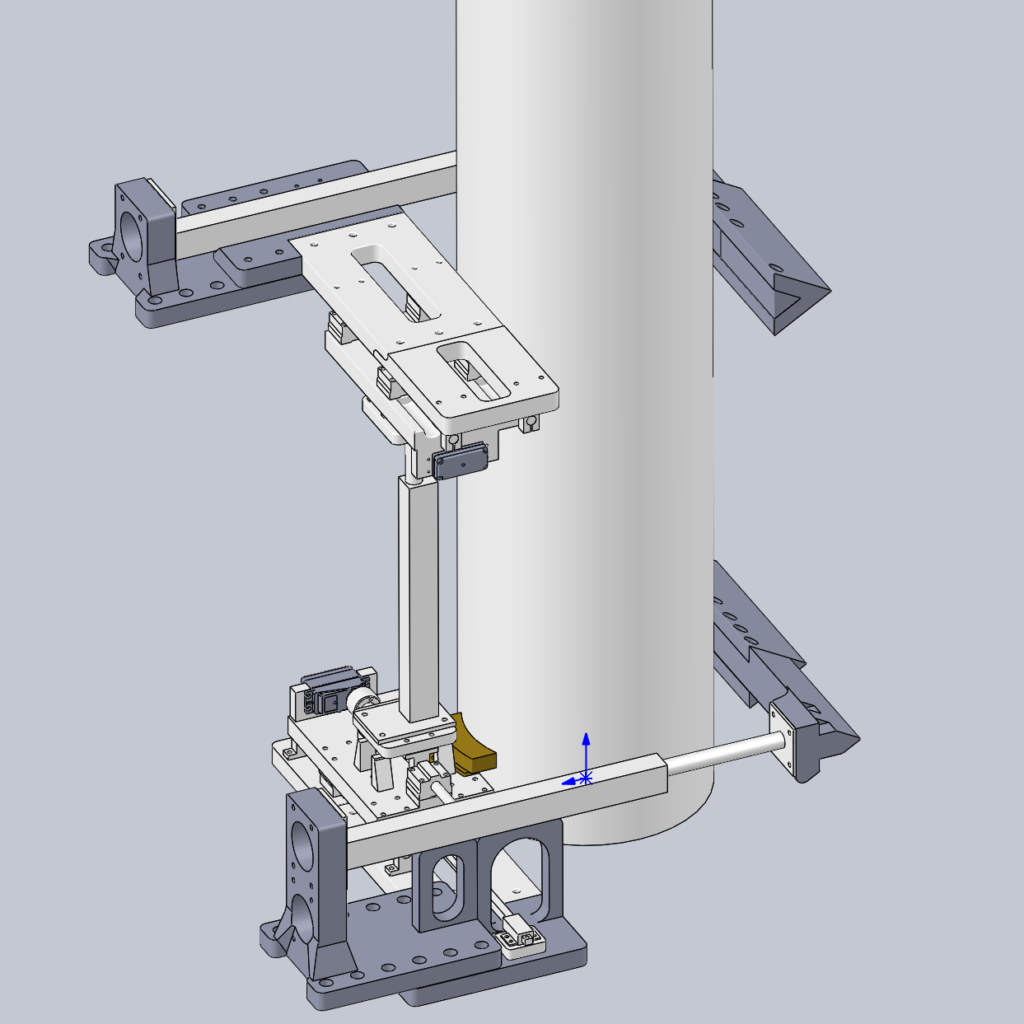
Overview
This project explored a bio-inspired climbing mechanism for inspecting cylindrical bridge piers. Inspired by the structure of an electrician’s climbing spur, we designed a robot capable of adapting to different pier diameters, climbing vertically, and locking itself in place without continuous power.
The goal was to create a system that could reduce the risks and inefficiencies of traditional infrastructure inspection methods, while also serving as a testbed for mechanical stability, passive locking, and reconfigurable robotic design.
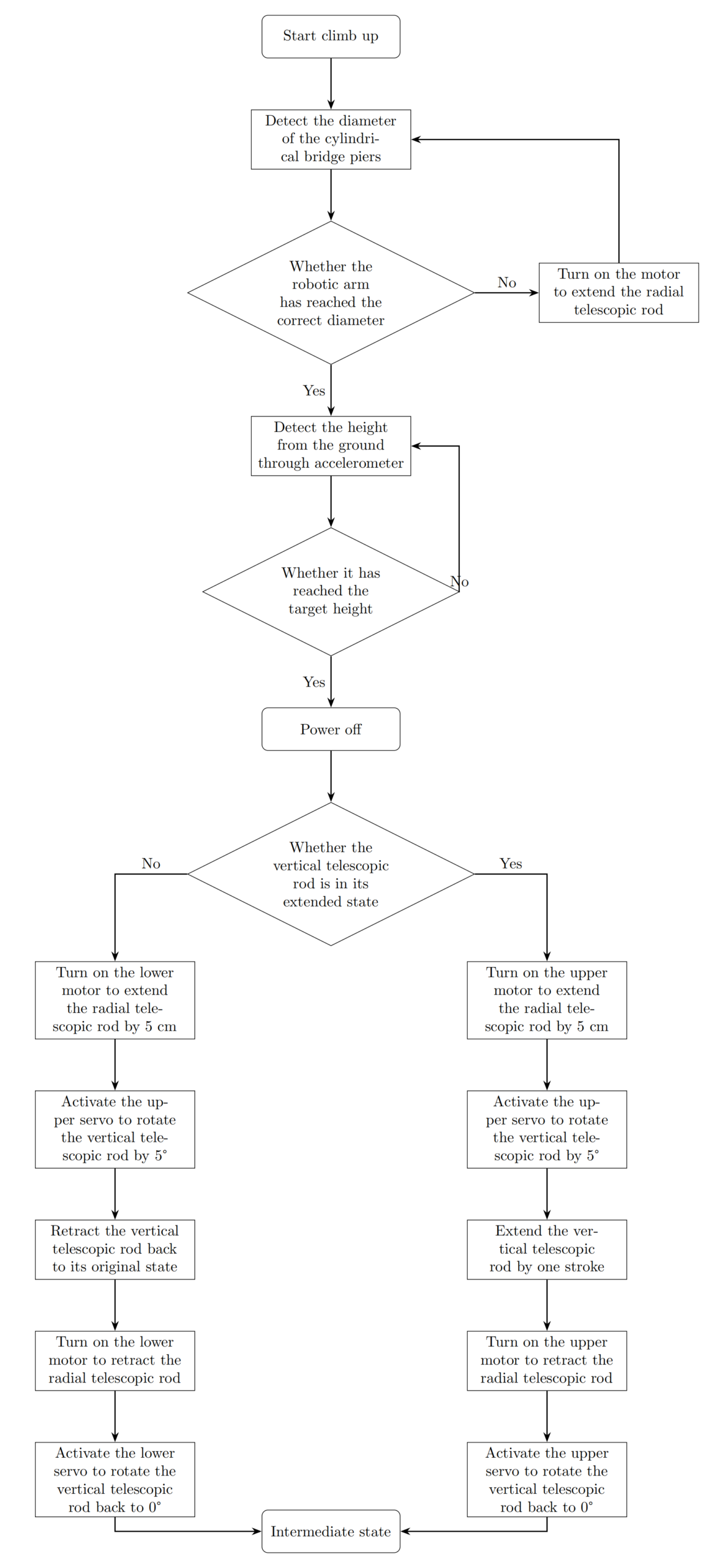
Fig: Flowchart of the climbing robot
Motivation
Inspecting cylindrical bridge piers is still a difficult and risky task.
Conventional methods often rely on rope access, aerial platforms, or diver-assisted inspection, which are labor-intensive, costly, and potentially dangerous.
Many existing climbing robots solve this problem only partially. Some rely on magnetic adhesion, which increases energy consumption, while others are limited by surface compatibility or fixed geometry.
My Role
In this project, I focused on:
- CAD design with Solidworks
- Movement simulation with Solidworks
- 3D printing
Design Highlights
Adaptive Fit for Different Pier Diameters
The robot was designed to fit cylindrical structures of varying sizes using telescopic rods and adjustable sliding tracks. Instead of rebuilding the chassis for each test case, the mechanism could adapt its grip to different diameters through mechanical adjustment.
This gave the design greater flexibility and made it more practical for real-world deployment.
Zero-Power Passive Locking
Rather than depending on brake motors or active clamping, the design attempted to use gravity and geometry to create a self-locking state.
The idea was to convert part of the robot’s weight into radial normal force, increasing friction and allowing the system to stay attached to the structure even when power was removed.
Bio-Inspired Climbing Motion
The climbing strategy was inspired by foot-spur style climbing, using alternating gripping and extension motions rather than wheels or tracks.
This approach aimed to improve stability on smooth vertical surfaces while reducing standby energy loss during stationary operation.